
Rosacea
Rosacea is a complex chronic inflammatory skin disease that mainly affects the center of the face (cheeks, nose, chin, and forehead). Unlike common acne, which is closely tied to excess oil and clogged pores, rosacea results from a disturbed interaction between the skin's innate immune system and its neurovascular system.
The disease process is driven by abnormally high activity of toll-like receptor 2 (TLR2) on keratinocytes. This boosts production of the enzyme kallikrein-5 (KLK5), a protease that cleaves precursor proteins into the active antimicrobial peptide cathelicidin LL-37. LL-37 acts as the biological trigger: it prompts mast cells to release histamine, promotes VEGF-driven angiogenesis, and stimulates sensory receptors such as TRPV1 on the skin's nerve fibers. The result is chronic vasodilation, nerve hypersensitivity (stinging and burning), and inflammatory papules and pustules on the face. An overgrowth of Demodex folliculorum mites in the hair follicles further fuels this inflammatory cascade.
At Haute-Derma, we view rosacea as a state of neurovascular hypersensitivity in the skin. We avoid aggressive, invasive treatments that rely on high heat or strong peeling agents. Our approach centers on three goals: calm the nerves and blood vessels, restore the lipid barrier, and rebalance the skin's own microbiome. By combining long-pulse lasers that target blood vessels with gentle immunomodulating actives, we help switch off flushing, shrink dilated vessels, and bring sensitive skin back to a healthy, resilient state.
Our Approach to Managing Rosacea at Haute-Derma
Because rosacea flares easily and the skin is highly reactive, Haute-Derma follows strict clinical principles:
- Trigger management: Each patient keeps a personalized lifestyle diary so we can identify and eliminate flushing triggers such as heat, sunlight, spicy food, alcohol, and emotional stress.
- Maximum protection and repair of the epidermal lipid barrier: Every in-clinic and at-home product must have a skin-compatible pH (5.0–5.5) and be free of drying alcohol, fragrance, essential oils, and irritating preservatives.
- Targeting blood vessels without diffuse heat: Laser wavelengths strongly absorbed by hemoglobin coagulate and shrink dilated vessels without damaging or peeling the skin surface.
Screening and Clinical Subtyping at Haute-Derma
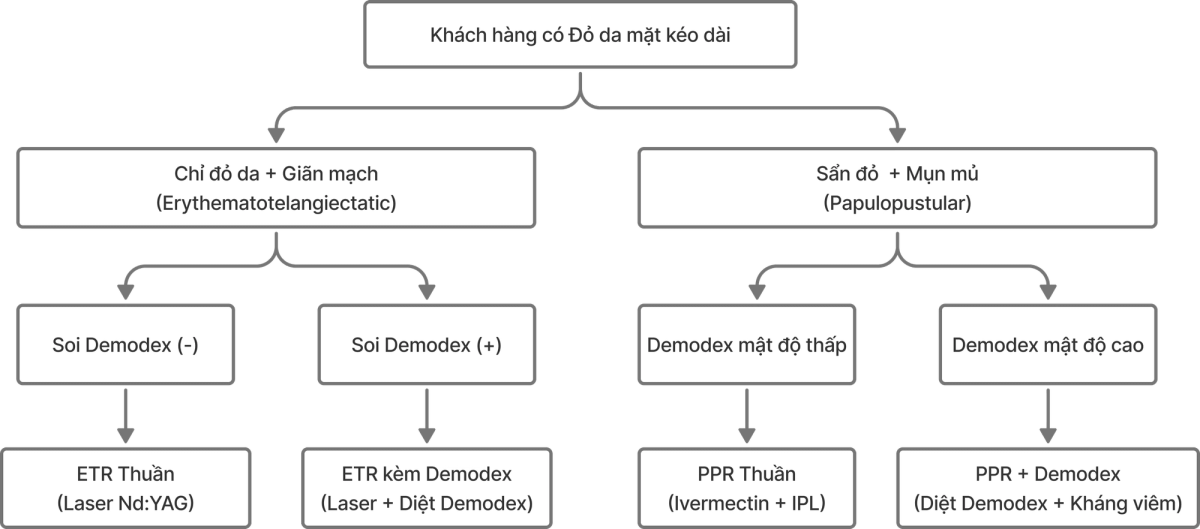
To choose the right treatment, our dermatologists classify each case using the following clinical pathway:
- Demodex density by direct microscopy: A light scraping of the stratum corneum or superficial follicular contents is examined under a light microscope. If the Demodex density exceeds 5 mites/cm², the patient receives antiparasitic treatment before any aesthetic procedures.
- Vascular assessment by dermoscopy: We look directly at dilated polymorphic vessels and superficial dotted or branching vascular networks around the nose and cheeks to gauge the degree of vascular damage.
- Screening to rule out systemic lupus erythematosus (SLE): Particular attention is paid to patients with a butterfly-shaped facial rash that spares the nasolabial folds. If systemic disease is suspected, we order antinuclear antibody (ANA) testing and consult with colleagues.
Clinical Management and Aesthetic Treatment Protocol at Haute-Derma
Our treatment strategy aims to switch off inflammation, constrict dilated vessels, and calm the skin's sensory nerves:
- Long-pulsed Nd:YAG laser (1064 nm): An effective option for the erythematotelangiectatic (ETR) subtype, especially for deeper vessels. Millisecond-long pulses target hemoglobin inside the vessels and convert light into heat, coagulating the walls of dilated vessels so they shrink and fade naturally—without bleeding or open wounds.
- Intense pulsed light (IPL) with specialized filters: Advanced IPL with narrowband filters (530–590 nm or 560–1200 nm) treats the fine superficial vessels behind widespread redness and stimulates supportive collagen around the vessels to reduce recurrence.
- Soothing barrier repair therapy: Cold electroporation delivers neurocosmetic actives such as palmitoyl tripeptide-8 (which reduces inflammatory cytokine release from sensory nerves), together with skin-identical ceramides, beta-glucan, and madecassoside, to cool the skin immediately, reduce flushing, and restore the damaged lipid barrier.
- Topical homecare protocol for microbial control and inflammation:
- Ivermectin 1% cream: Effectively kills Demodex mites and also has a direct anti-inflammatory effect by suppressing pro-inflammatory cytokines.
- Metronidazole 0.75% gel or azelaic acid 15–20%: Antimicrobial agents that reduce papules and pustules and calm background redness.
- Non-foaming milk cleanser: Cleans gently without stripping the natural protective oils from the skin.

